
A Thoughtful Step Forward for Calgary’s Water Future

Last night, City Council voted 10–5 to approve updates to Calgary’s Water Efficiency Plan and the Water Utility Bylaw. Councillor Yule voted in support of this proposal.
In the lead-up to this decision, many residents reached out with thoughtful questions and concerns. The most common themes focused on three areas: the outdoor watering schedule, the City’s ability to shut off water to a home, and the condition of Calgary’s water infrastructure, including leaks and system reliability. All are important to address.
Understanding the Watering Schedule
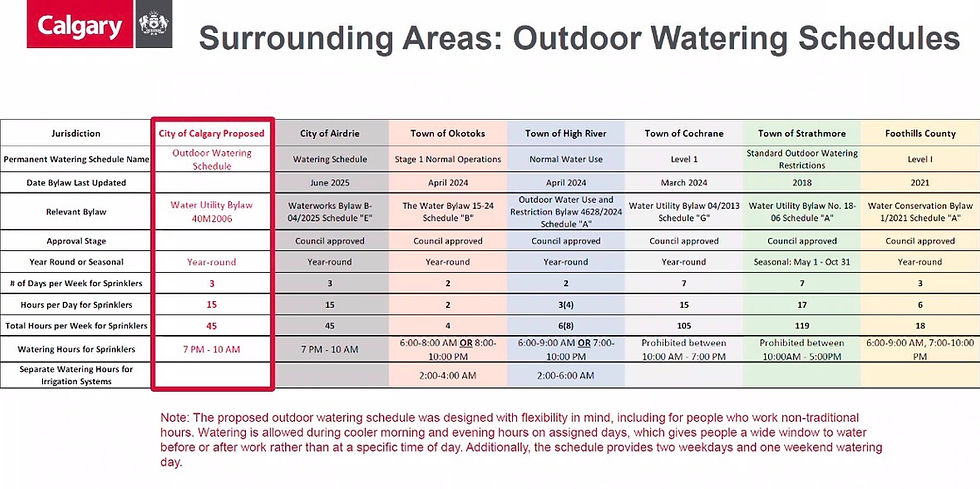
The watering schedule is one of the most visible changes and generated significant discussion. Council heard that clear, consistent direction has been shown to reduce water use more effectively than optional guidelines. Even modest reductions matter - the schedule alone is expected to achieve about a 3% decrease in water use during peak periods. This helps manage one of the core challenges Calgary faces: balancing peak demand with what the system is able to reliably deliver.
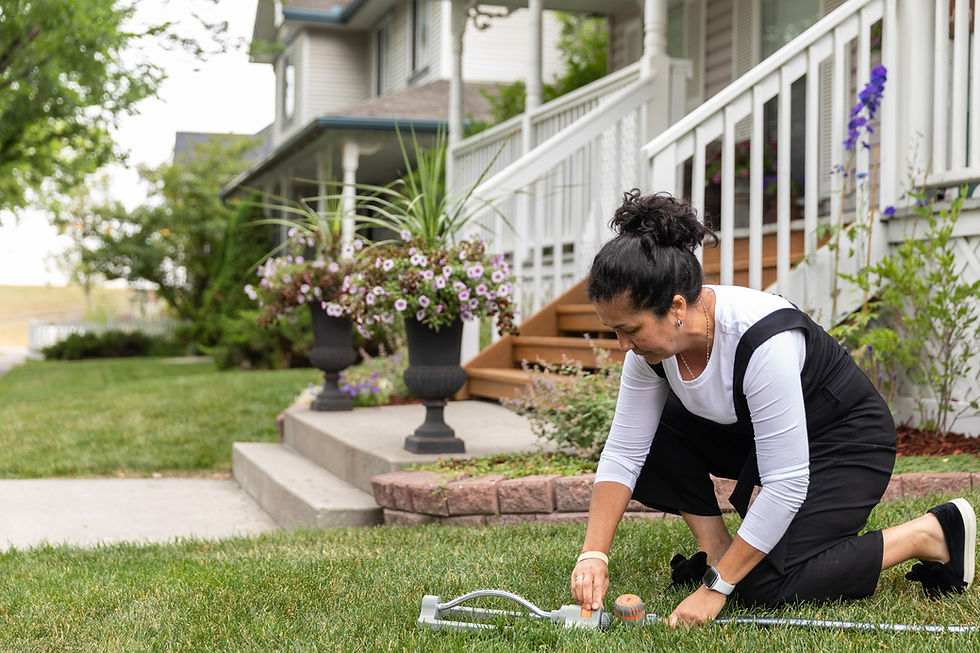
The watering schedule only applies to watering with sprinklers or automatic irrigation - things like watering food gardens, hand watering with a hose that has a nozzle, or letting kids run through the sprinkler, are not impacted by this schedule.
It is also important to note that not following the watering schedule will not result in your water being shut off. The bylaw does not permit the City to disconnect water service for watering schedule violations. Enforcement always begins with education, and bylaw officers work with residents to resolve issues before any further steps are considered.

Emergency Water Disconnection: Why It's in the Bylaw
The bylaw allows the City to disconnect water service in serious emergency situations. This authority is not new - it has been part of our water bylaw for over 20 years. This update introduces what's called a 'stop-use' provision, which reinforces the City's existing ability to act quickly in rare scenarios where crews cannot reach a site in time and immediate action is needed to protect the broader water system. This is not about routine enforcement, it is about ensuring the City can respond when something unexpected puts critical infrastructure or public safety at risk. For example, if a watermain breaks and crews cannot immediately reach the shutoff valve, the City needs the ability to quickly pause water flow to limit damage. Similar provisions exist in municipalities across the country.

Infrastructure and Conservation: Focusing on Both
Some residents raised concerns about infrastructure and leaks, asking why conservation measures are being introduced alongside ongoing system challenges. The reality is that both need to be addressed together.
Calgary’s water system is under increasing pressure. We are a growing city, and demand only continues to rise. At the same time, parts of our infrastructure, like the Bearspaw South feeder main, have less redundancy than we would like, making the system more vulnerable to disruptions.
This plan includes steps to better manage and maintain our water infrastructure. A key component is the shift to advanced, next-generation water metering, which will provide near real-time data. This allows for earlier leak detection, faster response times, and a better understanding of where water loss is occurring across our system. It also supports more proactive maintenance and long-term planning.
The City is also continuing to invest in the inspection, repair, and replacement of aging infrastructure. The recent challenges with the Bearspaw feeder main were a reminder of why ongoing upgrades matter and why building greater resilience into the system is essential.
Reducing water loss and improving reliability are not separate from conservation - they are central to it. The less strain we place on the system while repairs and updates are underway, the better positioned we are to avoid disruptions.
Understanding Calgary's Water License
Calgary currently uses about 43% of its allocated water. Some residents have asked why we need conservation measures when we are using less than half of what we are allowed to take. It is a fair question - but the allocation number can be misleading.
A water allocation is a permitted ceiling granted by the Province, not a guaranteed supply. It sets the maximum the City is legally allowed to draw, but it says nothing about how much water is actually available at any given time.
The gap between what our provincial license permits and what we can actually rely on is why building a more resilient, efficient system matters. The more we can do with what we have, the better protected Calgary is, today and as the city continues to grow.
Doing Our Part
This plan is a direct response to the recommendations of the independent panel that reviewed the Bearspaw Feeder Main failure. The panel was clear: the time for half-measures has passed. Council is doing the difficult work of following through on those recommendations. Not because it is easy or politically comfortable, but because it is the right thing to do for Calgary's future.
Calls to strengthen water conservation in Calgary date back more than a decade. Neighbouring municipalities have already acted, and in many ways, Calgary is only now catching up. Previous councils have faced criticism for delaying the hard decisions about our water infrastructure. That hesitation has a cost, and it is one that falls on future generations.
This bylaw update is not about any single change. It is a comprehensive package, addressing conservation, infrastructure investment, and system resilience together. It reflects a commitment to making careful decisions now to avoid far more disruptive ones later.
At its core, this is about stewardship. Calgary's water system connects us all - our homes, businesses, and communities depend on it. Councillor Yule's support for this plan reflects a belief that taking these proactive steps today is how we ensure Calgary remains resilient, sustainable, and prepared for whatever comes tomorrow.
Learn more about updates to Calgary’s Water Efficiency Plan and the Water Utility Bylaw.
Amendments to the Original Bylaw
Based on feedback received from residents, Councillor Yule supported several amendments to strengthen accountability, reporting, and implementation for both City Administration and elected officials in the delivery of the Water Efficiency Plan and Water Utility Bylaw.
Additions to section 5.1
This amendment takes direct feedback from residents regarding oversight and accountability metrics should an order to cease water use ever come into play. It was passed unanimously (15-0) by council.
The following is added after section 5(3) as section 5.1:
5.1 Where this Bylaw allows the Director, Water Services or the Director, Community Planning, to discontinue, disconnect or shut off water service to a Customer, the Directors may also in those circumstances issue an Order directing the Customer or group of Customers to cease ormrestrict use of water from the Water System in the manner and for the period of time specified in the Order. An Order under this section shall only be issued where voluntary compliance measures have been attempted and documented and have not achieved compliance, except where immediate action is required to protect the integrity of the Water System.
(2) A Director issuing an Order must publicly disseminate the Order by print or electronic media or by posting on The City’s website. A Customer is deemed to have received notice 24 hours after such public dissemination, or at such sooner time as a copy of the Order is delivered to the Customer’s service address as shown in the Customer’s account by an employee, agent or other representative of Water Services.
(3) An Order issued under this section must include documented rationale for the issuance of the order.
(4) Nothing in this section limits the ability of a Director in other sections of this Bylaw to discontinue, disconnect, or shut off water service supplied to any Customer.
Governance and Reporting: 'Stop-Use' Orders
Councillor Yule supported the Motion Arising that will require City Administration to report to Council at regular on intervals on the use of any 'stop-use' water provisions, including how many orders were issued, where, why, and what was done to restore service. This ensures the use of this authority remains transparent and accountable to both Council and residents. The motion passed 12–3.
Report back to Council on a bi-annual basis, beginning in Q1 2027, with respect to the use of Orders issued under Section 5.1 of the Water Utility Bylaw, including:
the number of Orders issued during the reporting period;
the duration and geographic scope of each Order;
the general rationale for issuance; and
a summary of actions undertaken to restore normal service conditions. ing Orders
Year One Reporting: Participation and Effectiveness
This motion directed City Administration to report back to Council by Q1 2027 on how well the watering schedule is working - including public awareness, impact on peak demand, and whether a voluntary or enforced approach is the right path. Councillor Yule voted to support this Motion Arising on the basis of gathering more data on behalf of residents, but the vote failed 9-6.
Year One Reporting regarding participation and effectiveness.
Report back to Council by Q1 2027 on:
participation and public awareness of the schedule and other conservation tactics
observed impacts on peak day water demand
comparative analysis of voluntary versus mandatory approaches in other jurisdictions; and
an evaluation of the effectiveness of the voluntary schedule and options for future implementation, including continued voluntary approaches or phased enforcement.
Comments